
The recovery from a stroke marks the beginning of a challenging journey toward reacclimatization to daily life. It’s a path paved with the hope of regaining what was lost and rediscovering what can still be achieved. This is where the STROKE RECOVERY ACTIVITY BOOK shines as an invaluable tool, offering not just exercises, but also a guiding beacon. This book proposes an innovative approach to integrating rehabilitation activities into the daily routines of survivors, facilitating a more organic and less intimidating path to recovery. But how do these activities translate into tangible improvement? Join us on this journey to find out.
Elevating Cognitive Function Through Daily Interactions
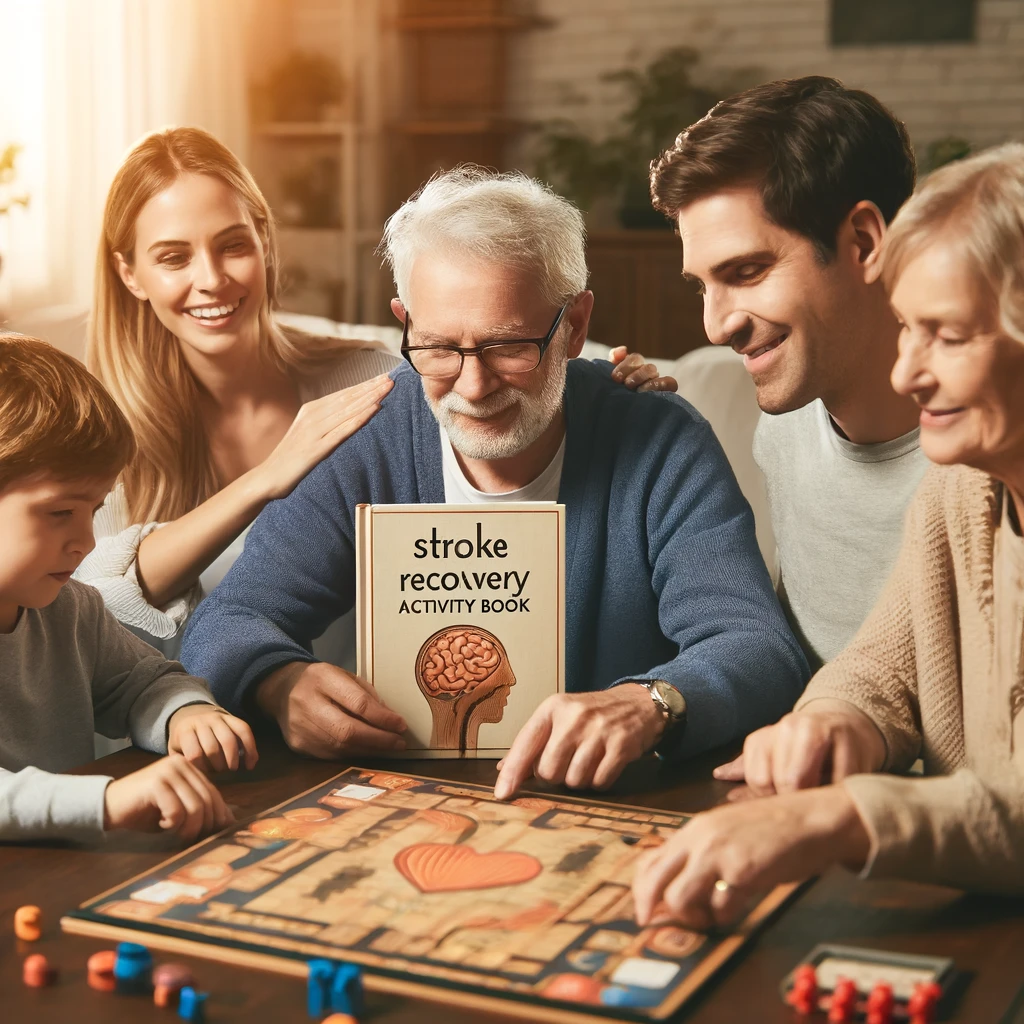
Cognitive enhancement extends beyond traditional exercises; it thrives in the interaction with one’s environment. Engaging with the STROKE RECOVERY ACTIVITY BOOK’s brain games during family board nights or solving puzzles together over breakfast can transform routine interactions into cognitive strengthening sessions. These activities, endorsed by cognitive scientists and rehabilitation therapists, are not just tasks but bridges to recovery, promoting neural plasticity and functional improvement in everyday settings.
Language Skills: Beyond Aphasia
Language recovery is a pillar of stroke rehabilitation. The book introduces innovative ways to weave language exercises into daily conversations, such as storytelling sessions where survivors describe their day or participate in discussions about current events, using prompts from the book. These methods, recommended by speech and language therapists, serve dual purposes: enhancing linguistic ability and ensuring survivors remain an integral part of the social fabric of their families and communities.
Memory: Anchoring the Past, Present, and Future
Memory exercises from the book can easily become part of daily life. Simple yet effective strategies like associating daily tasks with specific memories or using visualization techniques for remembering future appointments are not only therapeutic but also empower survivors to take control of their daily lives. These practices, rooted in the latest memory research, underscore the adaptability of the human brain and its capacity for recovery with consistent effort.
Fine Motor Skills: The Art of Possibility
Fine motor skill recovery is critical for independence. The book suggests practical activities like cooking, gardening, or even crafting, which can be adapted to varying levels of ability. Occupational therapists advocate for these activities not only for their physical benefits but for their psychological ones, offering a sense of achievement and normalcy.
Motivation and Emotional Well-Being
Rehabilitation is as much about the mind as it is about the body. The book addresses this by incorporating activities designed to boost motivation and improve emotional well-being. Guided reflections, goal-setting exercises, and spaces for journaling personal victories big and small are woven throughout its pages. These elements are crucial for maintaining a positive outlook, as highlighted by psychologists specializing in stroke recovery.
The STROKE RECOVERY ACTIVITY BOOK transcends the conventional boundaries of a rehabilitation tool; it becomes a companion on the journey towards reclaiming a life altered by stroke. Its pages are not just filled with exercises but with opportunities—opportunities to connect, to remember, to grow, and to heal. The expanded development of these activities into daily routines emphasizes the book’s role not merely as a guide but as a catalyst for transformation.
This journey of recovery, supported by the book and the dedication of families and caregivers, illustrates a powerful narrative: stroke recovery is possible, and it thrives on integration, motivation, and the relentless pursuit of progress. Every page turned in the book, every activity integrated into daily life, marks a step forward. It’s a testament to the resilience of the human spirit and the tangible hope that lies within the structured, compassionate approach to rehabilitation.
Through the STROKE RECOVERY ACTIVITY BOOK, stroke survivors and their supporters are equipped not just with strategies for physical and cognitive improvement but with the inspiration to envision a future where every day holds the promise of improvement and every small achievement is a milestone worth celebrating. In this light, the book is more than a collection of activities; it’s a roadmap to a life reclaimed, one day, one activity at a time.